
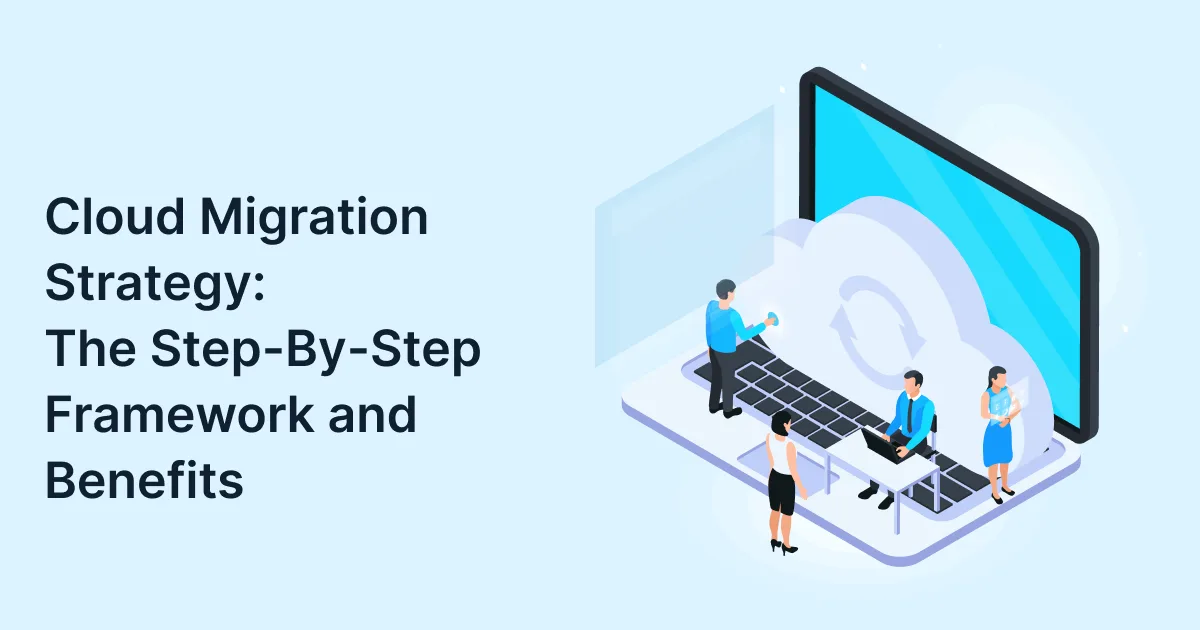
A cloud migration strategy is a structured approach that allows businesses to move applications, data & IT workloads to cloud environments efficiently while maintaining performance, security & cost control.
To succeed, organisations need a well-defined roadmap combined with tools like Cloud Management Services to ensure governance, scalability & operational visibility from the start.
Modern enterprises are also integrating Business Process Automation Services early in the migration lifecycle to streamline workflows and eliminate inefficiencies before and after moving to the cloud.
Industry Insight – According to Statista Cloud Computing report, the global cloud market is projected to surpass $1 trillion by 2028, making strategic migration more critical than ever. |
What is a Cloud Migration Strategy and Why Does It Matter for Modern Businesses?
To successfully transition to the cloud, you need a cloud migration strategy that defines how applications, data & workflows are assessed, prioritised, and migrated with minimal disruption and maximum efficiency.
A cloud migration strategy is not just about moving data; it’s about transforming how your business operates. It ensures that cloud adoption aligns with long-term goals such as scalability, resilience & cost optimisation.
Key Elements of a Strong Cloud Migration Strategy:
- Workload assessment: Identifying dependencies and complexities
- Cost modelling: Forecasting cloud expenses vs current infrastructure
- Risk mitigation: Planning for downtime, security & compliance
- Migration roadmap: Defining phases and prioritisation
- Automation enablement: Leveraging Business Process Automation Services for efficiency
By embedding automation at the foundation, businesses significantly reduce manual errors and accelerate deployment timelines.

What Are the 6 R’s of Cloud Migration and How Do You Choose the Right One?
To determine the best approach for each workload, you need to understand the 6 Rs of cloud migration strategy, which guide how applications are transitioned or optimised in the cloud. These strategies help balance speed, cost & long-term performance goals.
The 6 Rs Explained
| Strategy | What It Means | When to Use It | Business Impact |
| Rehost | Lift-and-shift migration without changes | Quick adoption | Fast, low-cost migration |
| Replatform | Minor cloud optimisation | Improve efficiency | Better performance |
| Refactor | Re-architect apps for cloud-native | High scalability needs | Long-term innovation |
| Repurchase | Switch to SaaS solutions | Replace legacy tools | Simplified operations |
| Retire | Remove unused applications | Reduce clutter | Cost savings |
| Retain | Keep workloads on-premise | Compliance or constraints | Flexibility |
Integrating Business Process Automation Services during each of these approaches ensures seamless execution, especially in testing, deployment & monitoring stages.
How Does a Step-by-Step Cloud Migration Framework Ensure Success?
To execute a successful cloud migration strategy, you need a structured process that ensures smooth transition, minimal downtime & long-term efficiency. These steps provide just enough depth to guide decision-making while keeping execution practical.
1. Build a Complete Inventory of Your IT Environment
To begin, you need a clear understanding of your current systems and assets. This helps avoid surprises during migration.
- Identify all applications, databases & workloads
- Map key dependencies between systems
- Highlight legacy or high-risk applications
Using Business Process Automation Services can simplify discovery and documentation.
2. Prioritise Workloads Based on Business Impact
To reduce risk, you need to decide what to migrate first based on complexity and importance.
- Start with low-risk, high-value workloads
- Identify business-critical systems that require careful planning
- Group workloads into phases for smoother execution
3. Choose the Right Migration Approach (6 Rs)
To ensure efficiency, you need to align each workload with the appropriate migration strategy.
- Use Rehost for quick transitions
- Apply Replatform or Refactor for optimisation
- Retire or retain applications where necessary
This step ensures your cloud migration framework is aligned with your long-term goals.
4. Prepare the Cloud Environment and Security Setup
Before migrating, you need to ensure your cloud infrastructure is ready and secure.
- Set up compute, storage & networking resources
- Configure security policies and access controls
- Establish backup and disaster recovery mechanisms
5. Migrate Data and Applications in Phases
To minimise downtime, you need to follow a phased migration approach.
- Start with a pilot migration
- Move workloads in planned batches
- Monitor performance during the migration
Automation through Business Process Automation Services helps streamline repetitive tasks.
6. Test and Validate All Systems
After migration, you need to ensure everything works as expected.
- Perform functional and performance testing
- Verify data accuracy and system integrations
- Check security and compliance requirements
7. Monitor, Optimise, and Scale Continuously
To maximise ROI, you need ongoing monitoring and optimisation after migration.
- Track performance and usage metrics
- Optimise resources to control costs
- Scale systems as business needs grow
Cloud platforms are also becoming smarter through AI. Businesses can explore deeper insights in AI-driven cloud efficiency to improve post-migration performance.
What Are the Key Steps for Cloud Migration Execution?
To effectively implement your cloud migration strategy, you need clearly defined execution steps that ensure consistency, reduce risks & maintain operational continuity.
Practical Steps for Cloud Migration –
- Create a complete asset inventory
- Prioritise workloads based on impact and complexity
- Choose the appropriate migration strategy (6 Rs)
- Prepare your cloud infrastructure and security layers
- Migrate applications and data in phases
- Conduct thorough testing before going live
- Monitor performance and optimise continuously
When organisations integrate Business Process Automation Services across these steps, they improve accuracy, reduce manual effort & ensure faster execution.
Businesses migrating ERP systems can also benefit from insights in SAP S/4HANA vs Oracle Cloud to make informed platform decisions.
What Are the Benefits of a Cloud Migration Strategy for Business Growth?
To stay competitive, you need a cloud migration strategy that delivers clear business value through scalability, agility & operational efficiency.
1. Cost Optimisation
Cloud eliminates upfront infrastructure costs and enables pay-as-you-go pricing.
2. Scalability & Flexibility
Easily scale resources based on demand without infrastructure limitations.
3. Improved Performance
Cloud environments enhance application speed and availability.
4. Advanced Security
Cloud providers offer built-in security features and compliance capabilities.
5. Business Continuity
Automated backups and disaster recovery reduce downtime risks.
6. Innovation Enablement
Cloud enables adoption of AI, analytics & automation technologies.
Organisations combining cloud adoption with Business Process Automation Services unlock greater efficiency, faster innovation cycles & higher ROI.
Key Statistics on Cloud Migration
94% of enterprises already use cloud services (Source – Flexera 2024 Report)
What Challenges Can Arise in Cloud Migration and How Can You Overcome Them?
To ensure a smooth cloud migration strategy, you need to identify potential challenges early and proactively mitigate them with the right tools and planning.
Common Challenges and Solutions
| Challenge | Impact | Solution |
| Data security concerns | Compliance risks | Implement strong governance |
| Downtime during migration | Business disruption | Use phased migration |
| Legacy system compatibility | Integration issues | Refactor or replatform |
| Cost overruns | Budget strain | Monitor and optimise usage |
Leveraging Business Process Automation Services plays a critical role in overcoming these challenges by ensuring consistency, reducing errors & enabling real-time monitoring.
Conclusion: How to Build a Future-Ready Cloud Migration Strategy
A well-planned cloud migration strategy is essential for organisations aiming to modernise operations and stay competitive in a rapidly evolving digital landscape. By following a structured cloud migration framework, understanding the 6 Rs & embedding automation into every stage, businesses can significantly reduce risks and maximise outcomes.
More importantly, success doesn’t end at migration, it continues with optimisation, monitoring & innovation. This is where combining cloud expertise with Business Process Automation Services creates long-term value by streamlining processes and accelerating growth.
If you’re planning your cloud journey or looking to refine your current approach, partnering with experienced experts can make all the difference. You can connect with KatalystTech specialists to explore how to align your migration strategy with business goals and unlock scalable, future-ready outcomes.
Key Takeaways
- A cloud migration strategy ensures structured and efficient cloud adoption
- The 6 Rs guide decision-making for workload migration
- Step-by-step frameworks reduce risk and downtime
- Automation improves speed, accuracy & ROI
- Cloud enables scalability, innovation & cost optimisation