
In today’s digital landscape, manufacturers and large enterprises often pay a high price for hidden integration friction. Projects run over budget, data silos slow decision-making, and every change risks unplanned downtime. However, this complexity can transform into a catalyst for speed, resilience, and new revenue when an enterprise API strategy forms the foundation of API digital transformation. Today, 82% of organisations already adopt API-first delivery, demonstrating how this approach accelerates outcomes when implemented effectively.
Over the next few minutes, explore a practical guide to transition from disconnected point-to-point integrations to a unified API ecosystem that drives enterprise agility in the API economy. This approach also enables enterprises to leverage legacy systems without replacing them or inflating operational costs.
Why Implement an API Strategy Today?
In a world where digital transformation budgets face increased scrutiny, executive buy-in is fragile, and the API economy evolves faster than traditional change cycles, a well-crafted digital transformation API strategy offers tangible value across three critical dimensions:
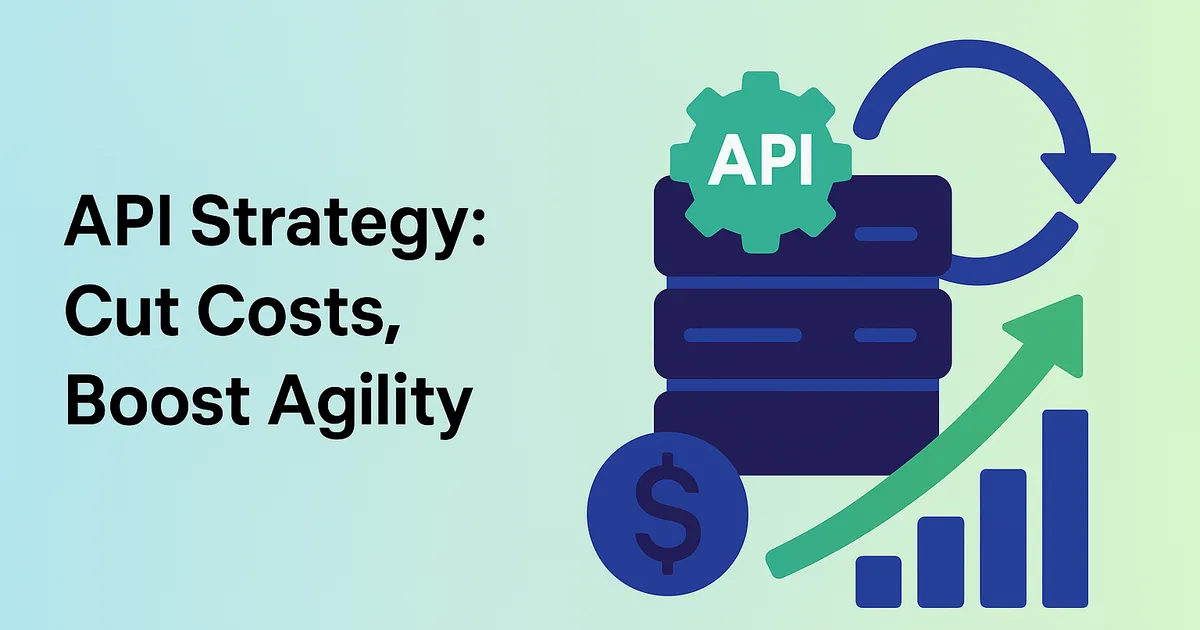
Financial Impact: Reusable APIs eliminate redundant development efforts and reduce maintenance costs compared to bespoke integrations, improving overall enterprise service management efficiency.
Operational Efficiency: Standardised API interfaces break down data silos and significantly reduce unplanned downtime across complex enterprise IT ecosystems.
Strategic Agility: Open, secure API endpoints invite partners, suppliers, and citizen developers to co-create innovative services, fueling enterprise agility in the API economy.
When APIs are developed as products rather than one-off integrations, technology shifts from being a cost centre to becoming a powerful profit engine.

Core Building Blocks of an Enterprise API Strategy
Adopting an API-First Mindset
Every business capability, such as order tracking, predictive maintenance data, or billing, should be designed as an API product with its own lifecycle, roadmap, and end users. Today, 25% of enterprises are entirely API-first, a growth of 12% year on year. This momentum highlights how an API-first approach strengthens API digital transformation and helps enterprises modernise without disrupting operations.
Governance That Enables Innovation
A balance of centralised standards and distributed execution ensures consistency in multi-vendor ecosystems without limiting innovation. A lightweight governance model defines:
- Naming and versioning conventions
- Security standards (OAuth 2.0, mTLS, zero-trust policies)
- API design guidance, including OpenAPI and AsyncAPI
While domain teams retain freedom to innovate, automated quality gateways ensure that every deployment aligns with governance and supports smoother enterprise service management workflows.
Leveraging AI-Powered API Management
Modern platforms use AI-Powered API Management for anomaly detection, performance forecasting, and automated documentation. These capabilities accelerate troubleshooting, reduce dependency on limited expert resources, and streamline operations across distributed enterprise IT ecosystems.
End-to-End API Lifecycle Implementation
A strong enterprise API strategy covers the full API lifecycle, from concept to retirement:
- Discovery & Prioritisation – Identify high-value capabilities hidden within legacy systems and evaluate them based on business impact.
- Design & Contract-First Development – OpenAPI contracts act as the central source of truth for teams and consumers.
- Build & Automated Testing – CI/CD integrations ensure automated security checks, preventing scope creep.
- Deploy & Monitor – Canary/blue-green releases reduce downtime, while monitoring dashboards detect performance issues in real time.
- Version & Retire – Sunset guidelines and migration paths maintain sustainability across the API portfolio.
Strengthening Security and Compliance Across Platforms
With enterprises operating in hybrid, edge, and on-prem models, security in enterprise IT ecosystems must be multi-layered:
- Authentication & Authorisation: OAuth 2.0 with granular access controls
- Behavioural Protection: Rate limiting for detecting automated and AI-driven threats
- Data Security: Encryption, audit trails, and regulatory compliance (GDPR, HIPAA, PCI-DSS)
Shift-left threat modelling introduced early in the design phase reduces costly emergency patches later.
Organising Ownership and Accountability
Clear ownership frameworks help scale a mature digital transformation API strategy:
| Role | Primary Focus | Key Deliverables |
| API Program Office | Governance & Metrics | API standards, scorecards, and ROI insights |
| Platform Team | Shared Infrastructure | API gateways, developer portals, and AI-Powered API Management |
| Domain Teams | API Product Development | API roadmaps, enterprise API products, SLAs |
| Security & Compliance | Risk Management | Threat modelling, audits, and incident mitigation |
This structure promotes alignment and reduces friction in large-scale enterprise service management environments.
Implementing a Fast-Track API Roadmap
Enterprises cannot pause operations for complete system overhauls. A phased approach accelerates adoption:
- First 90 Days: Assessment, integration cataloguing, governance launch, selection of an API management gateway
- 4 to 9 Months: Standardisation of a key business capability into an API product, rollout of a developer portal
- 9 to 18 Months: Adoption of CI/CD automation and introduction of partner-facing or monetised APIs
Most Katalyst clients combine this roadmap with hybrid delivery models to maintain control while gaining acceleration.
Measuring Success: Metrics That Matter
Executive confidence depends on measurable outcomes such as:
- Faster time-to-market
- Reduced MTTR for API incidents
- API reuse rate across new projects
- Revenue growth and cost savings from reusable API products
Over time, reusable APIs become long-term business assets with compounding cost benefits.
Avoiding Common Mistakes in API Adoption
Cultural resistance remains a top barrier in enterprise API strategy execution. Overcome this through:
- Targeted upskilling
- Internal advocacy networks
- Quick wins demonstrating reduced downtime and better audit performance
Other common pitfalls include a lack of governance, neglecting legacy constraints, and insufficient documentation, all of which impact long-term success in API digital transformation.
How Katalyst Supports Innovation
With 18+ years of experience supporting Fortune 1000 companies and mid-sized manufacturers, Katalyst Software Services Technologies provides comprehensive enterprise API solutions grounded in strategy, engineering, and impactful change management. Our AI-powered management framework detects defects early, prevents downtime, and enforces governance at scale, all optimised for modern enterprise IT ecosystems.
Next Steps: Translate Your Strategy into Business Value
Industry leaders today are transforming APIs into revenue-generating assets. Whether the goal is a comprehensive roadmap, an accelerated team, or an API readiness assessment, Katalyst ensures measurable business outcomes.
Ready to unlock enterprise agility? Schedule an API strategy workshop and experience your first set of high-value APIs within 90 days, driving continuous innovation across the API economy.
A disciplined enterprise API strategy, combined with governance, AI-Powered API Management, and iterative rollout, makes digital transformation sustainable and scalable, turning complexity into long-term enterprise advantage.