
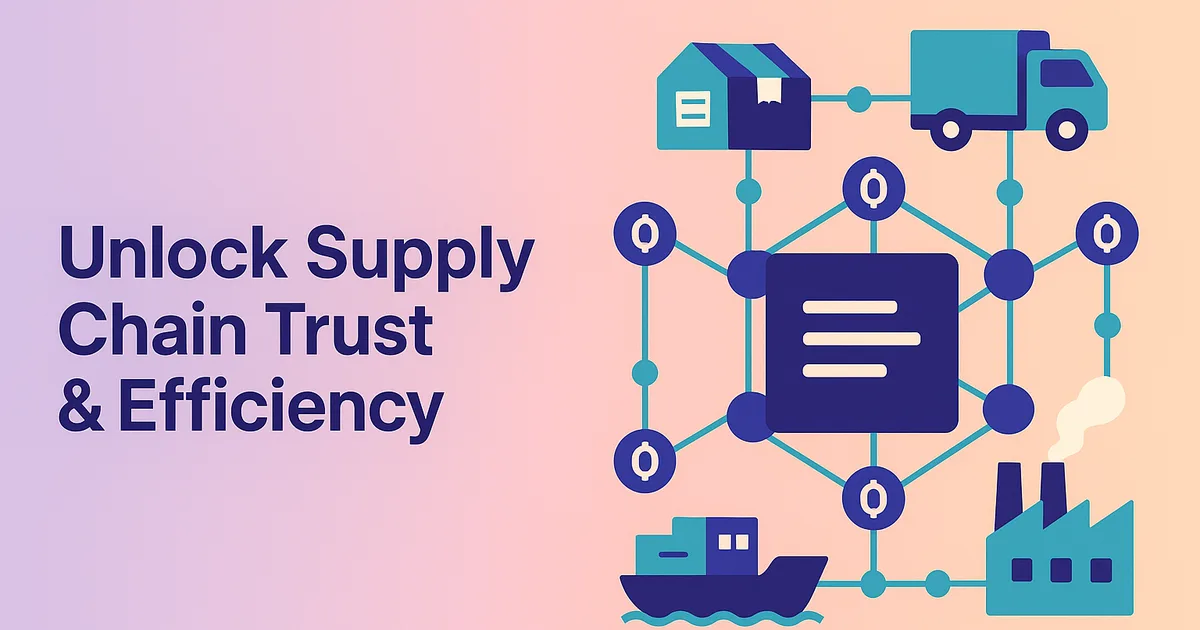
In today’s rapidly evolving supply chain landscape, every bottleneck causes more than delays; it erodes profit. When data sits trapped in silos, documents vanish, and production grinds to a halt while teams scramble for answers, the cost quickly mounts. However, supply chain traceability with blockchain offers a modern solution: a secure, tamper-proof record of every transaction, handoff, and movement throughout the supply chain.
This innovation enables instant traceability, precise recalls, and a new level of supply chain transparency between partners, eliminating disputes over inaccurate data. The global market for blockchain traceability in supply chain solutions surpassed USD 3.55 billion in 2025 and is expected to skyrocket to more than USD 55.31 billion by 2035.
Whether you operate in retail, manufacturing, or healthcare, understanding how blockchain improves supply chain visibility is critical. In this article, we’ll uncover how blockchain creates a resilient, transparent framework, backed by real-world success stories, practical implementation steps, and strategic insights for leaders aiming to modernise their supply chains.
Understanding the Hidden Costs: Why Traditional Supply Chains Are No Longer Fit for Purpose
Supply chains have become intricate webs of disconnected systems. Data doesn’t flow; it hops between ERP instances, spreadsheets, and third-party portals, and every hop adds risk for all stakeholders involved. This “complexity tax” silently drains value from operations, often visible only after disruptions occur.
Let’s break down the challenges slowing traditional supply chains:
- Unplanned Downtime: Missing provenance data halts production lines, costing thousands per hour in idle labour and wasted materials.
- Scope Creep: Adding visibility tools often balloons complexity and cost when systems can’t communicate effectively.
- Counterfeit Exposure: Without a shared ledger, counterfeit parts enter unnoticed, damaging brand trust and increasing recall risk.
- Executive Buy-in Challenges: When ROI isn’t clear or depends on large-scale replacements, decision-makers hesitate to act.
Today’s fragmented systems struggle to keep pace in the digital era. The urgency to build an unalterable, unified foundation that connects vendors, carriers, regulators, and customers is greater than ever. This is where supply chain traceability with blockchain shines, preserving your infrastructure while enabling transparency and resilience.

The Power of Blockchain: Building Enterprise-Wide Transparency
At the heart of modern blockchain traceability in supply chain solutions lies a decentralised, unified ledger. This replaces disconnected records with a timestamped, verifiable system that builds end-to-end trust across global operations. Here’s how blockchain for supply chain transparency in retail and manufacturing delivers results.
Immutable, Shared Ledger
A decentralised blockchain ledger records every transaction from raw material acquisition to delivery in secure, time-stamped entries. This immutability removes the need for costly third-party audits and disputes, strengthening supply chain transparency.
Smart Contracts for Automated Compliance
Smart contracts automate compliance by embedding rules (like temperature thresholds or ESG standards). They trigger automatic alerts or payments when conditions are met or breached, reducing manual effort and ensuring real-time accountability.
Tokenised Assets for Complete Visibility
Every shipment or SKU can be linked to a unique digital token, connecting physical goods to verified digital records. Scanning an item instantly reveals its history, showing exactly how blockchain improves supply chain visibility and strengthens traceability in complex vendor ecosystems.
Hybrid Delivery Model for Seamless Integration
Most enterprises can’t switch overnight. A hybrid blockchain model merges cloud scalability with on-prem control, offering cost efficiency and low-latency precision. This flexible model enables supply chain traceability with blockchain without overhauling your ERP.
Pro Tip: Start with a high-risk, high-visibility product family such as perishables or medical devices. Early success builds confidence and provides a roadmap for wider blockchain integration.
Five Steps to Successful Blockchain Adoption: The Resilient Traceability Framework
Enterprises achieving end-to-end supply chain transparency follow a structured, five-step path:
- Map Your Data Flows: Identify critical handoffs, duplicate data, and pain points through team interviews.
- Select a Best-Fit Integration Strategy: Choose between API connectors for modern ERPs, IoT gateways for sensors, or batch loaders for legacy systems.
- Configure the Blockchain Network: Define membership, consensus model, and node placement for a secure, permissioned setup.
- Pilot and Validate: Run blockchain in parallel with current systems for one product line. Measure improvements in recall time and inspection speed.
- Scale and Govern: Create governance frameworks, upskill teams, and integrate blockchain metrics into dashboards for ongoing insight.
| Deployment Model | Upfront Cost | Time to Value | Best For | Key Risk |
| Cloud SaaS Node | Low | 3-6 Months | Global Retail Rollouts | Vendor Lock-in |
| On-Prem Node | Medium | 6-12 Months | Regulated Facilities | Capital Expense |
| Hybrid Delivery | Moderate | 4-8 Months | Legacy Ecosystems | Governance Complexity |

Proof That Matters: Turning Blockchain Traceability into Real Results
Walmart’s Food Safety Breakthrough
By deploying IBM’s Hyperledger blockchain, Walmart reduced mango traceback time from 7 days to 2.2 seconds, proving that supply chain traceability with blockchain transforms recall speed and accuracy.
Pharmaceutical Serialisation with DHL
DHL and Accenture linked over 7 billion serial numbers to a blockchain, blocking counterfeit drugs and improving audit efficiency. This is a clear example of blockchain for supply chain transparency in retail and healthcare success.
A recent survey found that 63% of companies now use blockchain to verify product provenance and strengthen security, further proving how blockchain improves supply chain visibility.
Measurable Business Outcomes You Can Achieve
- Faster Recalls: Identify defective batches instantly before brand damage occurs.
- Reduced Compliance Costs: Shared blockchain logs cut manual documentation hours.
- Enhanced Customer Trust: Transparency builds consumer confidence through verifiable data.
Translating Insights into Action: Roadmap for Supply Chain Leaders
To realise these results from blockchain traceability in supply chain solutions, leaders should:
- Build a Data-Driven ROI Hypothesis: Quantify recall costs, downtime, and compliance labour.
- Secure Executive Buy-In Early: Align blockchain projects with measurable KPIs.
- Bridge Skills Gaps: Train teams in blockchain fundamentals or partner with experts like Katalyst.
- Control Scope Creep: Start small with an MVP and expand based on data-backed results.
- Plan Employee Adoption: Celebrate small wins early to build organisational momentum.
Watch Out: Ignoring legacy system compatibility during blockchain design can lead to rollout downtime. Address interoperability early for smooth integration.
Start Your Blockchain Traceability Journey Today
Capturing efficiency, compliance, and customer trust is possible with supply chain traceability with blockchain without disrupting production or increasing risk. Partner with Katalyst Software Services Limited to map your pilot, quantify benefits, and unlock measurable ROI at a fraction of the cost.
The roadmap to complete supply chain transparency begins with one call. Schedule a consultation with a Katalyst strategist and start building your resilient, future-ready supply chain today.
Frequently Asked Questions About Blockchain in Supply Chain Traceability
What role does blockchain play in supply chain traceability?
It serves as a decentralised ledger, recording all transactions securely and improving supply chain transparency across stakeholders.
How does blockchain eliminate data silos?
Partners contribute to a shared blockchain ledger that unites ERP, IoT, and portal data, creating a verifiable single source of truth.
What results can businesses expect?
Expect faster recalls, fewer disputes, and reduced audit prep time, proving how blockchain improves supply chain visibility.
How does blockchain compare to RFID or AI?
Blockchain secures and shares verified data, while RFID and AI analyse and track events. Together, they deliver optimal traceability.
Should we choose cloud or on-prem blockchain?
Cloud offers speed and low cost; on-prem offers control. Hybrid models balance both scalable blockchain traceability in supply chain solutions.