
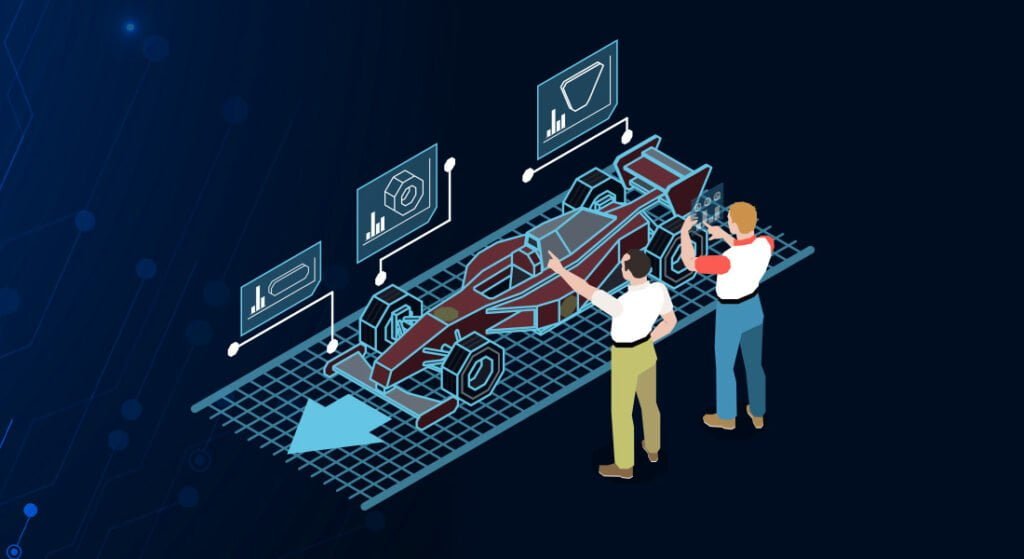
Much like other Industry 4.0 technologies, digital twins can seem complex at first, they serve as the link between your factory floor and its virtual counterpart.
Using IoT sensors, real-time data analytics, and AI, digital twins mirror your production assets, systems, or processes in a digital space. Every temperature change, vibration pattern, or pressure fluctuation is captured and reflected instantly allowing engineers to see, simulate, and improve operations in real time.
Unlike static simulations, digital twins are continuously synchronized with their physical versions. This feedback loop allows teams to predict outcomes, prevent failures, and fine-tune processes without disrupting production.
In simple terms, it’s like having an ever-present digital operations team optimizing every parameter 24/7 for maximum efficiency and performance.
Types of Digital Twins
1. Product Twin
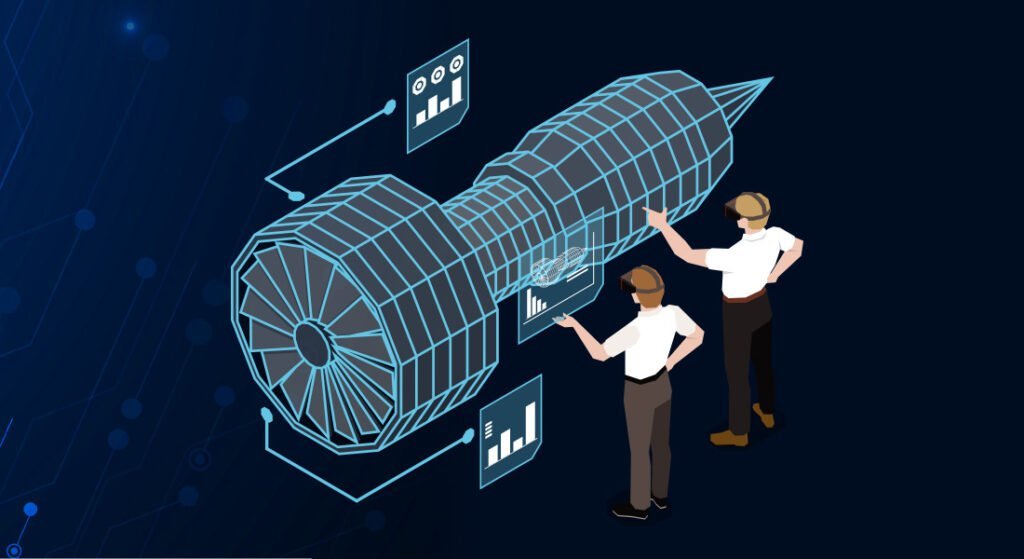
A Product Twin acts as a digital prototype, enabling engineers to test functionality, durability, and design performance virtually before building a single physical model. This minimizes prototyping costs and accelerates design validation.
2. Process Twin
A Digital Twin Technology in Manufacturing process, allowing teams to simulate “what-if” scenarios from supply chain delays to machine recalibrations ensuring the production line can adapt smoothly to disruptions.
3. System Twin
A System Twin offers a macro-level view of your operations by connecting multiple assets, lines, or departments. It provides an integrated understanding of how everything functions together, empowering smarter resource allocation and predictive decision-making.
Key Benefits of Digital Twin in Manufacturing
1. Reduce Costs and Waste
Traditional prototyping and physical testing consume significant time, materials, and resources.
Digital twins replace these repetitive cycles with virtual iteration and validation, allowing manufacturers to design, test, and refine products entirely in a digital environment.
- Engineers can make rapid design changes and evaluate performance without interrupting production.
- Manufacturers can safely simulate process improvements, line adjustments, or new configurations before making physical changes.
- Teams can experiment freely in a risk-free, data-driven virtual model, minimizing material waste and reducing the cost of errors.
Additionally, predictive maintenance powered by digital twins helps organizations forecast equipment issues before they occur.
- Continuous real-time monitoring enables early detection of anomalies.
- Predictive models identify potential component wear or inefficiencies.
- Maintenance teams can take proactive action to prevent costly repairs, reduce downtime, and extend asset lifespan.
Together, these capabilities make digital twins a cornerstone of cost efficiency, reliability, and continuous operational improvement in modern manufacturing.
2. Improve Optimization and Performance
With countless interconnected systems in modern factories, making adjustments can risk disruption. A digital twin creates a safe virtual sandbox where you can test process changes, identify inefficiencies, and validate outcomes before implementation.
For example, if a machine’s output begins to dip, the twin can pinpoint causes such as part wear, calibration drift, or temperature variance and recommend precise corrective actions.
This continuous feedback loop ensures maximum uptime, consistency, and operational excellence.
Drive Efficiency. Realize Potential
Cut through technical complexity with Katalyst.
We build streamlined, powerful solutions that automate processes and integrate data, freeing you to focus on strategic growth
3. Accelerate Time-to-Market
In a highly competitive market, being first often determines success. Digital twins streamline product development and process alignment, ensuring faster transitions from concept to production.
By modeling both the product and the production system digitally from the design stage, manufacturers can start production sooner, improve responsiveness, and meet deadlines even amidst supply chain volatility.
4. Promote Sustainability and Lifecycle Efficiency
Beyond operational excellence, digital twins play a pivotal role in sustainable manufacturing.
By optimizing energy use, material selection, and production efficiency within the virtual environment, companies can significantly reduce waste, emissions, and resource consumption before physical execution ever begins.
Moreover, digital twins enable continuous lifecycle monitoring from design and manufacturing to maintenance and decommissioning ensuring equipment is used efficiently throughout its lifespan.
This full-lifecycle visibility supports compliance with environmental standards, circular economy goals, and ESG reporting frameworks.
5. Enhance Stakeholder Engagement and Training
Digital twins are not just internal optimization tools they also transform how companies engage with partners, investors, and the public.
Stakeholder Engagement and Guest Experiences
Modern manufacturers in digital twins showcase innovation through interactive virtual environments.
- Investor Presentations: A digital twin can demonstrate facility performance, sustainability progress, or future expansion plans.
- Customer Experiences: Visitors can explore virtual factory tours, viewing real-time operations safely and immersively.
- Educational Outreach: Engineering schools and vocational institutes use digital twins to train future talent in real-world industrial dynamics.
By blending transparency with innovation, digital twins become powerful storytelling and branding assets reinforcing a company’s commitment to technological leadership.
Implementing Digital Twins: A Practical Roadmap
Successfully deploying digital twins requires a combination of technological readiness, data infrastructure, and process discipline.
Here’s a simplified six-step approach manufacturers can follow:
- Select High-Impact Assets – Identify equipment or processes with measurable inefficiencies.
- Develop the Digital Model – Use CAD data or 3D visualization to represent the asset virtually.
- Integrate IoT Sensors – Capture live data streams such as temperature, vibration, and flow rate.
- Apply AI and Analytics – Use machine learning to detect anomalies and predict performance trends.
- Activate Continuous Monitoring – Connect the digital and physical systems for real-time insight.
- Iterate and Improve – Continuously refine the model based on operational feedback and outcomes.
Before deployment, ensure your data ecosystem is AI- and IoT-ready, with secure integration across platforms like Azure Digital Twins, AWS IoT, or dataPARC for real-time collaboration.
The Future: From Digital Twins to Intelligent Enterprises
Market Outlook
The global digital twin market is projected to grow from USD 24.5 billion in 2025 to USD 259.3 billion by 2032, powered by AI, cloud computing, and industrial IoT innovation (report)
AI-Powered Twins and Automation
The next evolution Virtual Twins merges simulation with real-world intelligence. Powered by Generative AI, these systems can predict multi-step scenarios, recommend design optimizations, and even self-correct performance deviations autonomously.
Reimagine business operations and accelerate growth
Katalyst Technologies’ solutions simplify IT, ERP, and supply chain management
so teams can act faster and scale smarter can help.
Digital Twin as a Service (DTaaS)
Cloud-based deployment models, or DTaaS, make adoption easier and faster. Companies can implement, test, and scale digital twins without managing heavy infrastructure, democratizing access to advanced manufacturing analytics.
Scalable Architecture Example
In the energy sector, digital twins of Compressed Air Energy Storage (CAES) systems use unsupervised ML to detect air leaks and performance drops. The same architecture can be quickly adapted for battery, turbine, or hydrogen systems, reducing development time and extending cross-industry applicability.
Unlock Industry 4.0 with Katalyst
The transition to smart, sustainable, and data-driven manufacturing demands more than technology; it requires strategic implementation.
At Katalyst Software Services Limited, our experts specialize in helping manufacturers deploy and scale digital twin and AI-driven engineering solutions. From reducing costs and downtime to achieving sustainability targets, we help organizations unlock measurable ROI and long-term competitive advantage.
Partner with Katalyst today to transform your manufacturing operations into a connected, intelligent enterprise.