
Friction between data silos, legacy systems, and a fast-moving market costs manufacturers and enterprises millions in rework, project delays, and unplanned downtime. Imagine a connected enterprise where every decision-maker, algorithm, and production line shares the same real-time insight, at a fraction of the cost and without a three-year overhaul. Companies implementing a data fabric for enterprise analytics reduce data integration efforts by 30 percent. This article explains how a data fabric unifies scattered data, enhances AI-driven analytics, and improves enterprise analytics efficiency, even within complex multi-vendor environments.
Why Traditional Enterprise Data Architecture Reaches Its Limits
Legacy systems were not designed to handle today’s sheer volume, velocity, and variety of sensor and external data. As a result,
- Projects run over budget and are late due to custom plumbing for each new data source.
- Departments hoard their data, causing costly duplication and missed insights.
- Unplanned downtime occurs because calendar-based maintenance misses hidden equipment patterns.
Our approach breaks these barriers with an adaptive enterprise data fabric that makes integration routine, not heroic.
Recognizing Common Challenges
- Analysts spend 70% of their time finding and cleaning data instead of analyzing it.
- Security teams patch platforms individually, increasing risk and overhead.
- Executives hesitate to fund initiatives due to slow AI ROI measurement.
What Is a Data Fabric?
A data fabric provides an enterprise-wide solution that weaves operational, transactional, and streaming data into a single, smartly cataloged layer. It:
- Connects any data source – cloud, edge, or on-premises, without disrupting operations.
- Uses active metadata so AI and users find trusted data in seconds.
- Automates governance policies, easing security and compliance in multi-system settings.
Adding intelligence to integration shortens time to insight and supports continuous, AI-driven optimization.
Katalyst acts as a strategic integration ally, ensuring each step hits milestones and delivers measurable KPIs.

Data Fabric and AI-Driven Analytics: A Powerful Combination
Our approach unlocks value through:
- Unified Context: Using data fabric for enterprise-wide data integration, datasets are linked through consistent business terms, data lineage, and quality scores. AI models learn from reliable context rather than guessing.
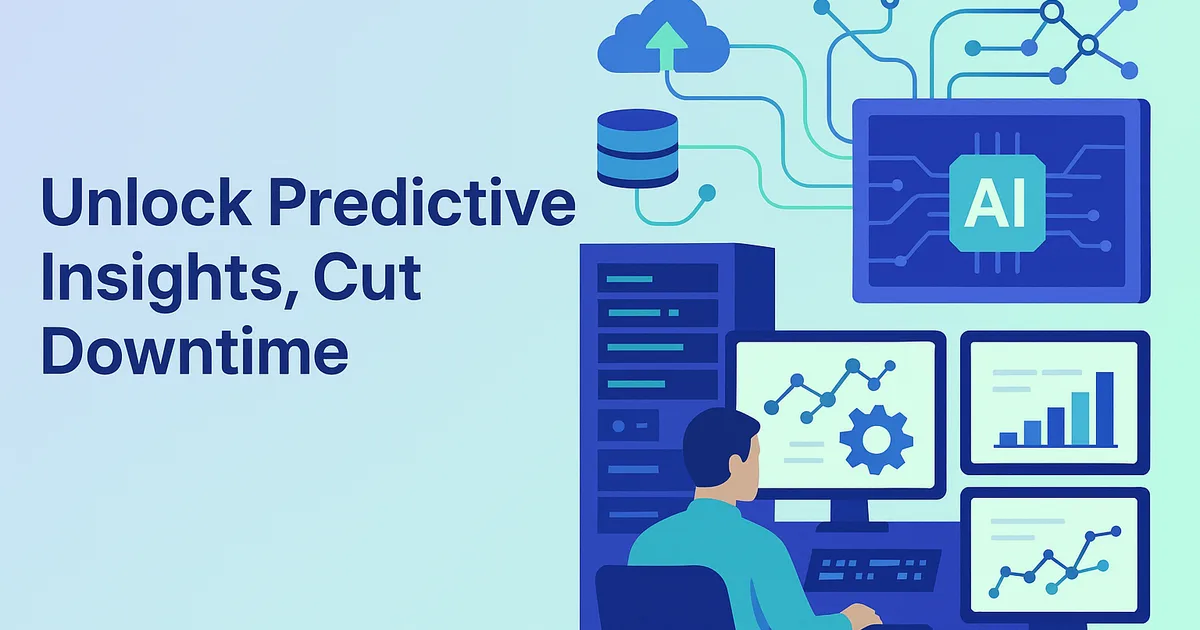
- Continuous Intelligence: Embedded machine learning detects performance drifts early, enabling predictive maintenance that cuts downtime by 20% (IDC, 2022).
- Decision Automation: Streaming analytics trigger alerts or robotic process automation when thresholds are crossed, delivering prescriptive guidance in seconds versus hours.
Building an Enterprise-Ready Architecture
Core Components:
- Connectors & APIs: Leading adapters connect ERP, MES, IoT platforms, and cloud data lakes.
- Metadata Lakehouse: Centralizes technical, business, and operational metadata.
- Governance & Security Layer: Implements role-based access, data masking, and audit logging.
- Orchestration Engine: Manages pipelines, dependency resolution, and SLA monitoring.
Design Principles:
- Start small and scale quickly by proving value in one unit before enterprise rollout.
- Prioritize open standards to avoid vendor lock-in across multi-vendor ecosystems.
- Use a hybrid delivery approach, keeping sensitive workloads on-premises and leveraging cloud flexibility for analytics bursts.
Five-Step Data Fabric Implementation Roadmap
- Strategy Alignment
Map business objectives like cost reduction and quality improvements to analytics use cases. Secure executive support early to prevent scope creep. - Data Inventory & Prioritization
Catalog data sources, assess quality, and score integration complexity. Focus first on high-value data assets. - Minimum Viable Fabric
Deploy the metadata catalog, base connectors, and governance framework for a key domain. Deliver quick wins to ease staff adoption. - AI-Driven Use Case Deployment
Implement machine learning models for predictive maintenance, supply chain visibility, and customer quality analytics. - Enterprise Rollout & Optimization
Expand connectors, automate monitoring, and refine operations to continually improve enterprise analytics efficiency.
Choosing Vendors and Standards
Selecting platforms for a data fabric for enterprise analytics can be daunting. Balance these factors:
| Evaluation Factor | Importance | Vendor Questions |
| Open APIs & Connectors | Avoid building custom solutions and vendor lock-in | How many plug-and-play connectors do you offer? |
| Active Metadata | Enables self-service analytics | Can you show lineage tracking live? |
| Governance Controls | Compliance without bottlenecks | Does data masking happen at query time? |
| Deployment Models | Supports hybrid environments | Can workloads be split between cloud and edge? |
| Pricing Transparency | Avoid hidden costs | Is pricing based on data volume or query counts? |
Keep future needs in mind; the lowest upfront costs can lead to expensive integration later.
Expected Measurable Benefits
Organizations report that combining data fabric and AI-driven analytics delivers:
- 40% faster insight generation for new analytics use cases.
- Twice the productivity for data scientists as manual data prep decreases.
- 15-20% reduction in operating expenses driven by predictive and proactive decision-making.
These outcomes highlight how a well-designed data fabric drives superior ROI without long delays.
Overcoming Common Barriers
- Skills Gap and Resource Constraints: Augment teams with tailored training and co-delivery to keep projects moving.
- Employee Hesitation: Highlight early wins and provide role-specific dashboards to demonstrate benefits.
- Security Concerns: Implement zero-trust architectures, unified identities, and automations from day one.
- Slow ROI Perception: Employ phased rollouts that provide incremental returns, funding future expansion, and keeping stakeholders engaged.
Future-Proofing Enterprise Analytics
As data fabrics mature, enterprises transition from predicting failures to autonomous self-healing operations. AI recommendations automatically adjust MES or ERP schedules, reducing overhead and maintaining agility in rapidly changing markets.
Partnering with Katalyst
With 18 years’ digital transformation experience in manufacturing and enterprise sectors, Katalyst Software Services Limited delivers enterprise-ready data fabrics through:
- A hybrid delivery model blending onsite domain expertise with cloud accelerators.
- Prebuilt connectors for legacy systems, reducing integration times by up to 30%.
- Proven approaches that accelerate analytics deployment, reduce costs, and maintain ongoing operations without disruption.
Ready to Turn Your Data into Decisions?
We ensure confident choices. Schedule a 30-minute strategy session with a Katalyst advisor to design your first high-impact use case and begin realizing results with data fabric for enterprise analytics in as little as 90 days.
In summary, data fabric for enterprise analytics replaces fragile pipelines with adaptive, governed links. Together with AI-driven analytics powered by a modern enterprise data architecture, you gain faster insights, predictive maintenance, and streamlined operations, boosting enterprise analytics efficiency across all plants and business units.
Let’s build that connected future!