
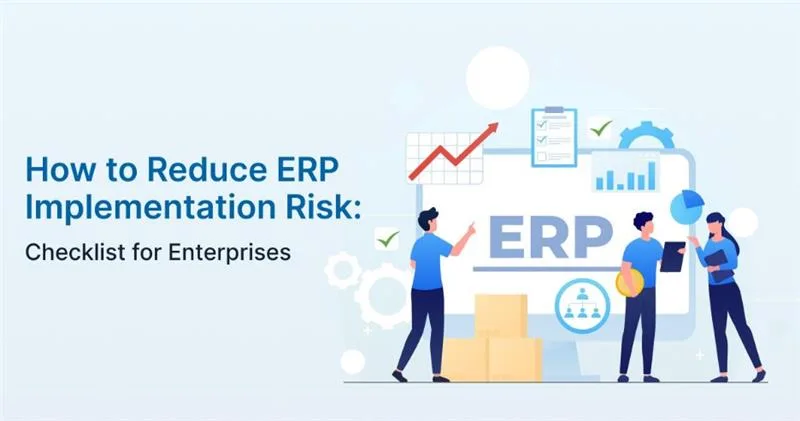
Most ERP projects don’t collapse overnight; they slowly lose control through missed timelines, rising costs, and growing operational friction.
Most companies struggle to deploy ERP systems that suit them even with new cloud tools. This usually occurs due to rigid structures, ineffective management, and unrealistic plans. With the increasing pace of growth of the firms, ERP is becoming a huge challenge to implement the systems that are not as fast as the firms are. ERP risk management has currently impacted the smoothness of operations, compliance with rules, and success in the long term.
This blog will discuss ways a company can reduce the risks of ERP through a malleable and resilient strategy. Through a Composable ERP Architecture, proper planning, proper management, and incremental implementation can help in preventing the normal mistakes. The guide will assist leaders in making intelligent decisions, minimizing issues, and developing ERP systems that transform business requirements.

Align ERP Strategy with Measurable Business Outcomes
ERP risks frequently occur when companies are interested in replacing systems rather than generating business value. Those businesses that fail to establish goals early might experience problems with adjusting priorities and scope of the project. According to the Enterprise ERP best practices, the projects of ERP should be linked to clear operational objectives such as faster financial closes, enhanced forecasting, and enhanced compliance.
When the objectives are clear, it is easier and more just to make decisions about governance. This clarity is beneficial to good ERP risk management because it enables companies to make wise decisions without negatively affecting the future.
Reduce Structural Risk Through Composable ERP Architecture
Rigid ERP systems may cause the development of long-term issues as they cannot be changed and need to be fully upgraded at any point. Composable ERP Architecture can be used to minimize this issue by allowing businesses to use components of the system individually, which can alter themselves. This architecture allows firms to enhance specific operations without interfering with the systems. In case of a failure, modularity allows one to correct a failure more easily.
This flexibility is one of the benefits of strong ERP risk management because companies have the flexibility to adapt to the new rules, changes in the market, and growth and does not necessarily need to change their ERP system entirely.
| Did You Know? |
| About 58.5% of companies prefer phased ERP implementation over big-bang approaches, which helps reduce risk and improve outcomes in complex deployments |
Define Clear and Realistic Cloud ERP Migration Steps
The use of cloud platforms brings speed and scalability, but when poorly executed, it can significantly increase ERP risk. A successful sequence of cloud ERP migration steps begins with application assessment, data preparation, and workload prioritization. Organizations that migrate too aggressively often recreate legacy inefficiencies in the cloud. A phased migration approach reduces disruption and allows teams to validate outcomes incrementally. As enterprises move toward digital-first operating models, cloud is increasingly becoming the future of ERP systems.
The properly designed ERP risk management also guarantees that migration decisions are based on business criticality and supported by testing environment and rollback plans that ensure continuity of operations.
Strengthen Data Governance to Minimize Implementation Failures
Data quality challenges remain a leading cause of ERP delays and post-go-live issues. Inconsistent master data, unclear ownership, and legacy inaccuracies often surface late in the project lifecycle. Enterprise ERP best practices emphasize establishing data governance frameworks early to reduce these risks. Defined standards for data validation, access control, and accountability improve system reliability.
Composable ERP Architecture supports controlled data usage across modules while maintaining enterprise-wide consistency, reducing the likelihood of reporting errors and integration failures.
| Did You Know? |
| About 83% of ERP users report data issues such as corruption, incompleteness, or errors during implementation, underscoring the critical need for strong data governance. |
Address Change Management as a Core Risk Factor
Poor quality of data is a significant cause of post project delays and problems after ERP systems are implemented. It is recommended by best ERP risk management practices to establish data management rules early, to reduce such post project delays and problems. Clear standards of checking data, access control, and responsibility can make the system very reliable.
The Composable ERP Architecture is composable and can be used to manage the data utilized in various modules and maintain uniformity throughout the company, which reduces the risks of occurrence of reporting errors and integration issues.
ERP Risk Reduction Checklist for Enterprises
To make reducing risks easier, businesses can use a structured checklist that covers common problems with ERP implementation. This table shows important risk areas, suggested ways to handle them, and the expected results from doing things well.
| Risk Area | Mitigation Focus | Business Outcome |
| Strategy | Outcome-based planning | Reduced scope creep |
| Architecture | Modular ERP design | Improved scalability |
| Data | Governance frameworks | Fewer delays |
| Migration | Phased cloud execution | Lower disruption |
| Change | Structured enablement | Higher adoption |
| Security | Early compliance design | Reduced exposure |
| Vendors | Integration governance | Lower dependency risk |
| Performance | Continuous monitoring | Sustained ROI |
Following this checklist ensures enterprises take a comprehensive approach to ERP implementation. By addressing strategy, architecture, data, migration, and change systematically, organizations can reduce risks, improve adoption, and achieve measurable operational benefits.
Embed Security and Compliance into ERP Design
ERP systems deal with highly sensitive business data, and the security should be considered at the beginning, or risks increase. Access controls and rules that are implemented late increase the risk of the system, and Cloud ERP migration steps encourage the use of modular designs to reduce the overall system vulnerabilities.
Good ERP risk management access controls and rules should be considered early to reduce the risk. Otherwise, the risk increases, and the system is prone to discover vulnerabilities, and this adds long-term costs.
Monitor ERP Performance Continuously to Prevent Risk Accumulation
ERP risk does not end at go-live. Many enterprises experience performance degradation months after deployment due to limited monitoring. ERP risk management increasingly focuses on post-implementation optimization to sustain value. Composable ERP Architecture supports continuous improvement by allowing enterprises to refine or replace individual components without disrupting the entire system.
Key metrics enterprises should track:
- User adoption and system utilization
- Process efficiency and error rates
- Integration stability and downtime
- Cost versus realized business value
Ongoing monitoring ensures ERP systems remain aligned with evolving business needs, fully leveraging Composable ERP Architecture for continuous adaptability.

Brand Authority: Katalyst Technologies’ ERP Risk-Focused Approach
Katalyst Technologies helps businesses create flexible, secure, and strong ERP systems. They are skilled in Composable ERP Architecture, which allows companies to update their ERP systems without causing problems.
By following enterprise ERP best practices, Katalyst helps businesses lower risks, grow easily, and keep their systems working well over time. Their method focuses on making sure ERP changes match changing business needs.
Conclusion: Building ERP Resilience Through Smart Design
To lower the risks of ERP implementation, it’s not enough to just pick the right platform. Companies need to use flexible designs, good management, and step-by-step plans. A Composable ERP Architecture, along with solid risk management, helps organizations improve their systems gradually while keeping costs and complexity in check. When paired with practical cloud migration plans and ongoing performance checks, ERP projects become stronger and more sustainable.
Enterprises planning ERP modernization should prioritize risk reduction through modular design, governance-led execution, and continuous optimization. Explore expert insights from Katalyst Technologies to build resilient ERP ecosystems.
Frequently Asked Questions
Your most common questions, answered with precision and insight